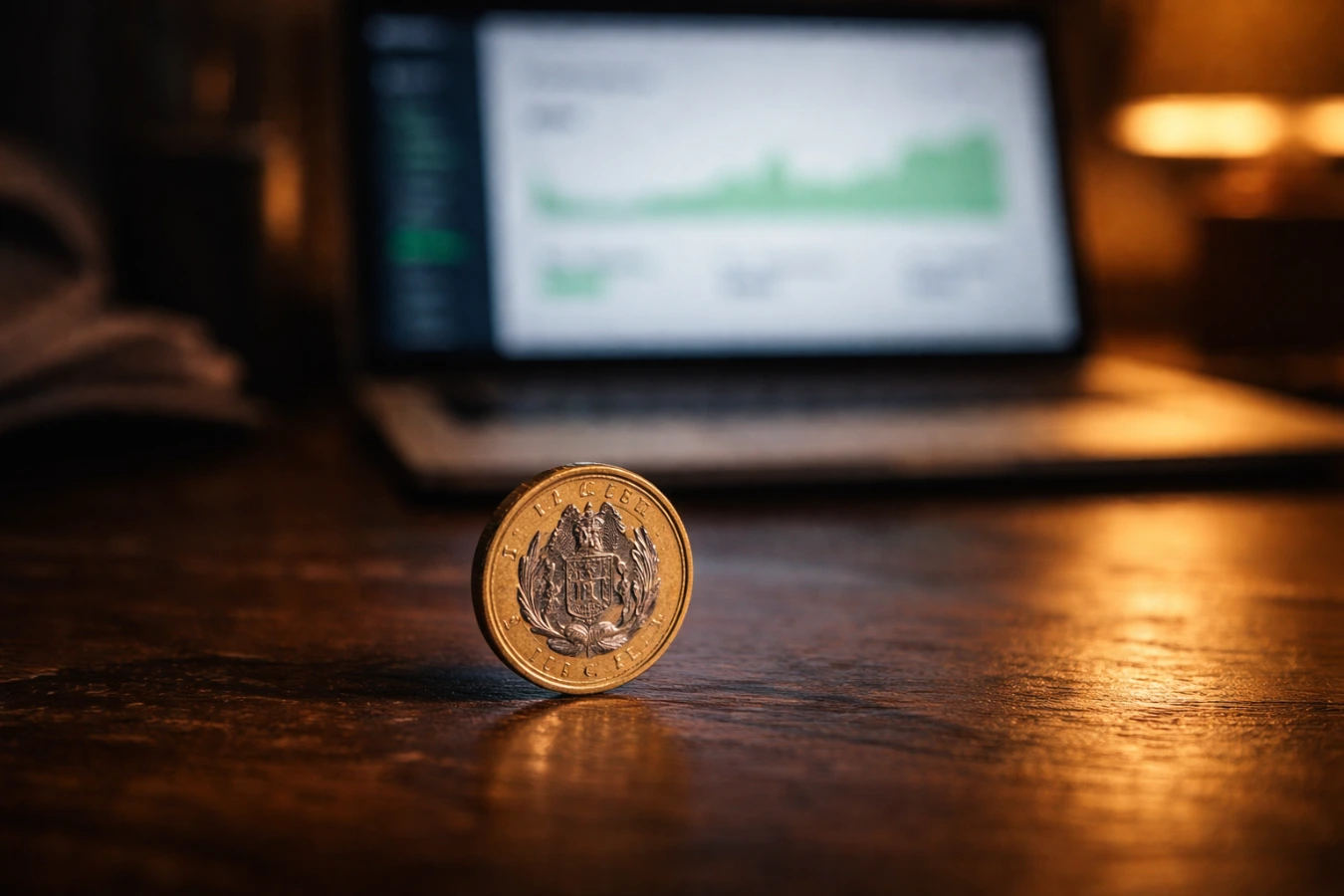
The best founders we know started with less than £100. Heres why thats actually an advantage.
"I spent three months trying to raise money for my first startup. By the time I gave up and just built the thing myself, my competitor (who started with nothing) already had paying customers."
Thats what a founder told me over coffee last week.
Another founder friend built a £5K/month business with £89. Domain, Stripe account, and a weekend of no-code. He had paying customers before the first guy finished his pitch deck.
Heres the uncomfortable truth: we use "needing money" as sophisticated procrastination. It feels productive to chase funding. It feels professional. But its often just avoiding the scarier work, actually building something and finding out if anyone cares enough to pay for it.
I've watched companies burn through millions without finding product-market fit and I've seen solo founders and vibe coders hit profitability with less than a fancy dinner costs. The money wasnt what made the difference. The people who started scrappy just moved faster and learned more.
The waiting room
Walk into any co-working space and you'll spot them. Founders in "pre-revenue" mode, waiting for funding to "properly" start. They're not wrong to want investment. They're just wrong about needing it first.
Having money feels safer. Feels like permission to take yourself seriously.
But while they're waiting for that permission, someone with £500 and a weekend free is already solving the same problem. Not perfectly. Not beautifully. But solving it. The funded founder often never catches up because they're still in strategy mode while the bootstrapped side hustle founder is on customer number 50.
Five myths about needing money to start a business
1. "I need investment to build something real"
A portfolio company I know spent £180K on their MVP. Custom everything, beautiful design, scalable from day one. They got 12 signups. Twelve.
Down the street, a solo founder used Typeform + Zapier + Airtable. Cost: £89. Revenue in month two: £2.3K.
First Round Capital found that 67% of successful startups began as side projects with no funding. They started ugly and got beautiful later. Heres whats wild: 75% of venture-backed startups never return cash to investors according to Harvard Business School research, while bootstrapped companies fail at roughly the same rate.
Your first version should embarrass you a little. If it doesnt, you waited too long to ship.
2. "Professional tools are expensive"
In 2010, you genuinely needed £50K to build a basic SaaS. Servers alone could bankrupt you.
Today, heres a tech stack that can take you to £10K MRR:
- Landing page: Carrd (£15/year)
- Payments: Stripe (2.9% per transaction)
- Database: Airtable (free up to 1,000 records)
- Automation: Make.com (free to start)
- Email: Loops (free for 1,000 contacts) Total damage: less than £100/month until you have serious revenue. My coffee budget is higher than that.
Gartner reports that no-code platforms now save companies 78-95% versus traditional development. If you're a vibe coder building with Cursor or Lovable the costs are even lower. The tools arent the barrier anymore. Believing you need more tools is.
3. "Money creates momentum"
I watched a funded competitor spend £50K on Facebook ads in month one. They got traffic, tons of it. Cost per acquisition: £847. Customer lifetime value: £79.
That math doesnt work no matter how much you raise.
Real momentum comes from understanding one person's problem so deeply that your scrappy first version still makes them say "finally, someone gets it."
ProfitWell's data shows funded companies have 3x higher customer acquisition costs than bootstrapped ones. OpenView's research found bootstrapped companies pay just £0.28-£0.94 to acquire £1 in new revenue, while funded companies spend £1.29 or more. When you cant throw money at problems, you get creative. And creativity compounds in ways that ad spend doesnt.
4. "Product-market fit requires capital"
Some of the best PMF stories started with creativity, not capital:
Airbnb found it by personally photographing every listing. Cost: a camera and subway fare. Dropbox found it with a video of a product that didnt exist yet. Cost: one Sunday. Stripe found it by manually onboarding every early user. Cost: the founders' time.
Markus Frind built Plenty of Fish with about £500 maximum and sold it for $575 million. He was making £4,000/month by month eight, working two hours a day.
Money cant buy you product-market fit. It can only buy you more time to avoid finding it.
5. "Funding means I'm on the right track"
A stranger typing their credit card number into your janky checkout form at 11 PM on a Tuesday, thats validation.
I've seen funded companies with zero revenue convinced they're crushing it because Sequoia took a meeting. Meanwhile, someone selling Notion templates for £29 has 100 happy customers who actually give a shit.
Investment is other peoples opinion. Revenue is what the market actually thinks. Only 0.05% of startups ever raise VC funding anyway. You're more likely to build a profitable business than to get funded.
This is exactly the kind of thinking the Survive Year One framework is built around. 20 rules for early-stage founders, most of them learned by getting it wrong first.
The low-budget playbook
The weekend prototype challenge
Give yourself 48 hours. Build the simplest possible version that solves the core problem. Not beautiful. Not scalable. Just functional. If you cant ship by Sunday night, you're overthinking it. Noah Kagan built AppSumo's MVP for $60 and made his first sale within days. If you're vibe coding with AI tools you can probably do it faster.
The £100 validation test
Take £100. Thats your entire budget to validate demand. Maybe its coffee for 20 customer interviews. Maybe its a month in a paid community where your customers hang out. The constraint forces creativity. Research from Harvard Business School proves that moderate constraints actually enhance innovation. So your limited budget isnt holding you back. Its actually helping.
The "do things that dont scale" method
Be the API. Send onboarding emails yourself. Handle support personally. Copy-paste between spreadsheets if you have to. Manual work teaches you what customers actually need. Plus, customers love founders who show up. This is what we do at sidething right now, every member gets personally onboarded by the founder. Its not efficient but its how you learn what actually matters.
The profit-first pricing model
Price it so you're profitable after just 10 customers. It'll feel too high. Good. High prices force you to deliver high value. You can always lower prices later. Raising them is harder and more awkward.
The build in public strategy
Share your journey from £0. Tweet your wins and failures. Write about what you're learning. Two things happen: accountability keeps you shipping, and customers root for transparent underdogs. Your story becomes your marketing. Thats literally why we built the wins feed and Inner Circles inside sidething, your progress becomes your credibility.
Why bootstrapping actually works better
Your constraints arent bugs. They're features.
Limited time forces you to focus on what matters. Limited budget means you cant hide behind fancy tools. Limited energy means only the essential survives.
The consultant with unlimited runway is still "validating product-market fit" (whatever that means). You shipped last week and made £127. You're ahead. Seriously.
ChartMogul's 2024 data shows something fasinating: during economic downturns, bootstrapped companies are more resilient. VC-backed startups below £1M ARR saw 300 percentage point growth decline versus 180 for bootstrapped companies. Constraints keep you honest.
When founders who bootstrapped eventually raise money, if they choose to, they dont need it to survive. They want it to accelerate. Thats a completely different conversation with investors. And a much better one.
The skills you build when you start with nothing, customer obsession, fast shipping, creative problem solving, building sustainably because you literally cant afford not to, those are the skills that money cant buy. Every VC will tell you they'd rather back a founder who's already making money than one who needs money to start.
Start with what you have
Right now, someone with less experience, less money, and less time than you is building something customers love. Ivan Kutskir runs Photopea, a Photoshop alternative with 10 million monthly users, on £700/year. His only costs: £50 for hosting and £16 for the domain.
They didnt wait for the perfect moment or the perfect bank balance. They just started. Imperfectly. Nervously. But they started.
You dont need permission. You dont need funding. You definitely dont need another productivity system. You need to start building and figure the rest out as you go.
sidething is for founders who ship with what they have. Start your side hustle with £100, not "someday" with £100K.
FAQ
Can you really start a business with no money? Yes. Plenty of successful companies started with under £100. The tools available today (free tiers of Stripe, Airtable, Carrd, Make.com, plus AI coding tools like Cursor and Lovable) mean the actual cost of building a first version is negligible. The real investment is your time.
How much money do you actually need to start a side hustle? Most sidething members started with less than £100. A domain, a payment processor, and a free or cheap tool stack is genuinely all you need to get your first paying customer. You can upgrade your tools once revenue justifies it.
Is bootstrapping better than raising VC funding? It depends on what you're building. But the data shows bootstrapped companies have lower customer acquisition costs, are more resilient in downturns, and develop stronger fundamentals. 75% of VC-backed startups never return cash to investors. Bootstrapping forces you to build something people will actually pay for from day one.
What free tools do I need to start a startup? A basic stack that can get you to £10K MRR: Carrd for your landing page (£15/year), Stripe for payments (2.9% per transaction), Airtable for your database (free tier), Make.com for automation (free tier), and Loops for email (free for 1,000 contacts). If you're vibe coding, add Cursor or Lovable to that list.
How do vibe coders start a business with no money? The same way any bootstrapped founder does, just faster. Vibe coders can build a working product in a weekend using AI tools. The harder part is getting paying customers, which is about validation, pricing, and talking to real users rather than spending money. Thats exactly what sidething helps with.
keep reading

ship your side project.
we turn your scattered to-do list into a roadmap, with the accountability to actually do it.

 sidekick online