
If you're searching for buildspace right now, you probably already know it shut down. August 2024. If you were part of it, you know how much that sucked.
buildspace was one of the best communities for builders that's ever existed online. Over 70,000 people went through it. Backed by a16z and YC. $10M raised. The Nights & Weekends program got thousands of people to actually start building their ideas instead of just talking about them. The energy in those early cohorts was unreal. Anime aesthetics, lowercase everything, memes, and in the middle of all that, people were shipping real projects and helping each other out.
We loved buildspace. A lot of people did. And since it shut down, a lot of people have been looking for what comes next.
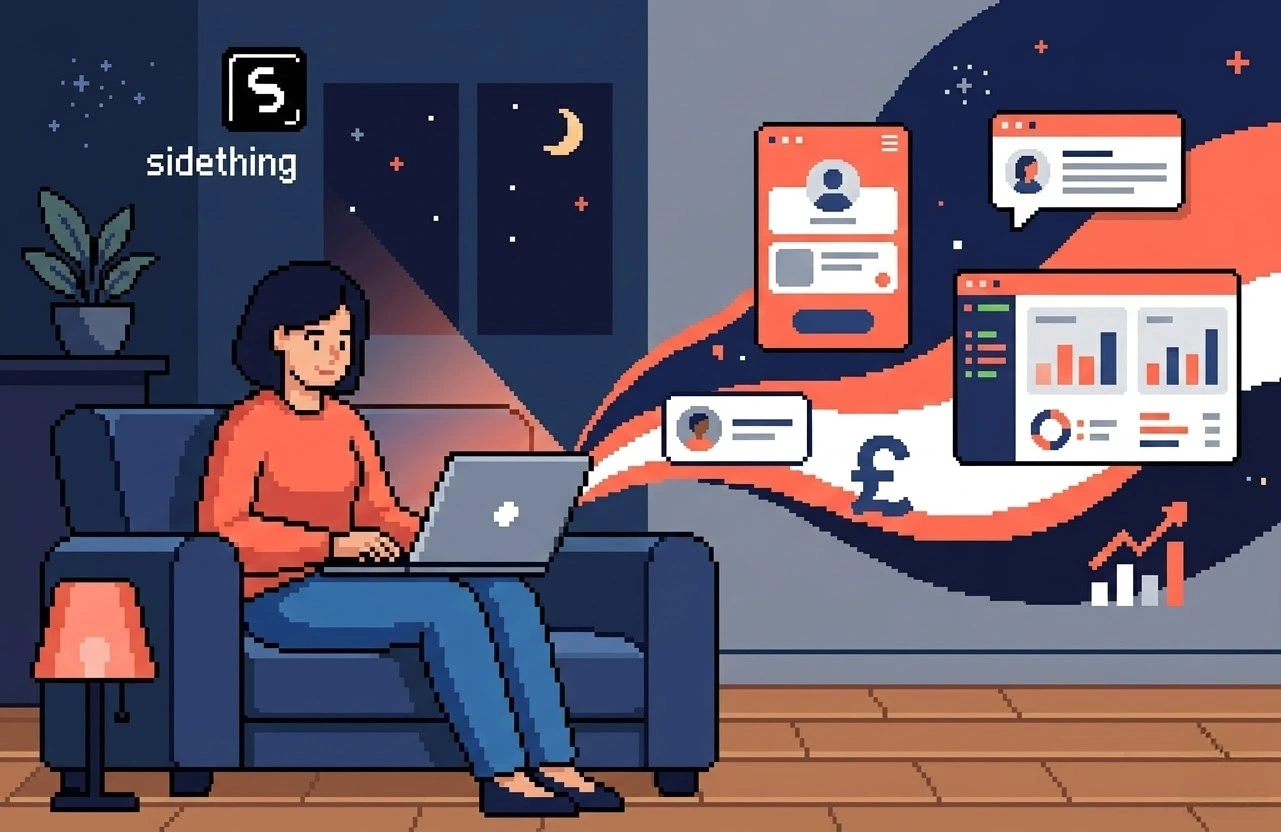
sidething is a structured incubator for side hustles. The tool itself is a free app (iOS, Android, web) with AI mentor check-ins and a system that strategically triages your to-do list so you always know what to work on next. The community side is gated behind an application and a paid tier, which keeps the quality really high. Accountability pods, inner circles, curated membership. Its not trying to be buildspace. Its something new.
To understand why we built sidething the way we did, it helps to understand what happened with buildspace.
What happened to buildspace
Farza, the founder, said it was personal. Burnout. He couldn't find the next direction. That's real and we respect it. Running something at that scale takes everything out of you.
But there were also some structural things going on that made it really hard to sustain.
buildspace was making around $1.5M a year from courses early on. When they pivoted to Nights & Weekends (which was free), that revenue went away. Sponsorships could cover some of it, maybe $2-3M a year, but they'd raised $10M at a $100M valuation. The economics were tough.
The platform itself was held together with email, Discord, YouTube Live, Framer pages, WhatsApp, and Twitter. There wasn't really a product underneath it all. The team talked about wanting to turn it into "a product that helps millions bring their ideas to life" but they never got there. When Farza was asked why he didn't hand it off, he said it was more of a community and brand than a product. Without a product, there's no way to automate things, no way to keep it running without one person driving everything.
The cohort model was also tricky at scale. Everything ran in 6-week batches. You sign up, build for 6 weeks, and then it ends. Your momentum stops. Later batches got bigger and it was harder to give everyone the same experience. Good projects got lost in the noise.
None of this takes away from what buildspace achieved. It genuinely changed peoples lives. But these were real challenges.
The app buildspace never built
This is the bit that really gets us. buildspace knew the next step was to build an app. Turn the community and the energy into an actual product that could scale, that could help people without needing Farza to personally run every cohort. They raised $10M to do it. They had the vision. They just never got there.
sidething is that app, in spirit. Not a buildspace clone. But the product that takes everything good about what buildspace represented and puts it into something that actually works as a tool. Something you can open on your phone at 9pm after the kids are in bed and it tells you exactly what to work on next. Something that checks in with you, keeps you accountable, and connects you with other people doing the same thing.
buildspace proved the demand. sidething is the product.

The buildspace alternatives out there
Since buildspace shut down, quite a few alternatives have popped up. If you search "buildspace alternative" right now you'll mostly find auto-generated lists of Web3 tools and developer bootcamps that don't really have much to do with what buildspace actually was.
The ones that do try to fill the gap have mostly copied the same model. Cohort programs, Discord communities, free courses. Even the websites look identical. Nobody's managed to recapture what buildspace had, because that magic was specific to buildspace and to Farza and to that moment in time. Cloning it doesn't work.
How sidething actually works
sidething is built for people with full-time jobs who want to build something on the side. The whole thing is designed around the reality that you've got limited time and you need to make the most of it.
The tool is free. The sidething app is free on iOS, Android, and web. It triages your to-do list, tells you what to focus on next, and gives you AI mentor check-ins that keep you on track. You've got 45 minutes before dinner, it knows what you should be doing. Available at 11pm on a Tuesday when no human mentor is awake. For people building around a day job, this stuff matters a lot.
The community is paid and gated. This is deliberate. buildspace grew to tens of thousands of people in Discord and it got noisy. Thats just what happens when anyone can join. sidething gates the community behind an application process and a paid tier. The result is a smaller, curated group of people who are serious about what they're building. Theres loads of value in that. When everyone in the room is actually executing, everyone moves faster.
Accountability pods and inner circles. You get placed with a small group of people at a similar stage. You check in with each other regularly. Your updates actually get seen. People actually respond. Its the opposite of posting in a Discord with 10,000 members and hoping someone notices.
Always on. No cohorts. No 6-week windows. No waiting for applications to open. You sign up and you start. Your progress builds over time instead of resetting every few weeks.
What buildspace got right
They got a lot right.
The core insight was spot on. Most people who want to build something don't need another course or another YouTube video. They need structure, community, and momentum. buildspace understood that. sidething understands that too.
Both are for builders. Both believe you learn by doing. Both put community and accountability ahead of curriculum.
Where things are different is in how its all put together. buildspace was a brand and a movement, which was amazing while it lasted. sidething is a product. The tool improves over time. The community stays high quality because its gated. It doesnt depend on any one person's energy to keep running
sidething is for
You've got a full-time job. You've got an idea or maybe a few ideas. You want to build something real but you cant quit your job to do it, and you probably shouldn't. You've got evenings and weekends and you need something that helps you use that time well.
Freelancers, creatives, indie devs, ecommerce founders, coaches, consultants. People who are good at what they do and want to build something of their own on the side.
Not "quit your job and grind 18 hours a day" energy. More like "i've got 2 hours tonight, what should i actually be working on" energy.
That's sidething. The tool is free. The community is where the real magic happens.
keep reading
ship your side project.
we turn your scattered to-do list into a roadmap, with the accountability to actually do it.

 sidekick online